Chinese Development Aid and Investment in Nepal
Ajaya Bhadra Khanal


Photo Credit: CGTN/CFP
In a recent post on X, the Chinese Ambassador to Nepal, Chen Song said, “(For) Every problem in Nepal, there is a Chinese solution.”
In recent years, China is aggressively pushing its development and aid diplomacy and Ambassador Song’s post reflects of this tendency.
So how is China pursuing development aid in Nepal, and how is it different from that of the West?
BRI
Our research shows that, in Nepal’s context, BRI is the top-level umbrella to promote Chinese strategic interests, both international and domestic. It seeks to influence Nepal’s development models and promote Tibet as a gateway to the South Asian market. Many tend to deny this, but Chinese policy documents and what China is doing on the ground in line with its Trans-Himalayan Multi-Dimensional Connectivity Network support this assessment.
Furthermore, the three cooperation principles outlined in the 2021 Chinese version of the BRI Implementation Plan draft, later revised as the BRI Framework Agreement, help us understand China’s logic. In the draft, China lists three cooperation principles:
Under the third principle, China suggested adopting China’s “enterprise-led, market-orientation, and government guidance” principle in Nepal, establishing inter-governmental cooperation mechanisms for coordination and policy guidance, and cooperating on law enforcement.
About 12 cooperation priorities covered almost all the sectors, indicating China’s wish to penetrate deeply into Nepal’s overall development strategies.
Development Cooperation
In addition to the BRI, China’s development aid to Nepal also comes through the development cooperation modality.
According to the Development Financer Information Management System (DFIMS) of the Ministry of Finance, China’s total aid commitments to Nepal at present stand at US$1.3 billion, while total disbursements stand at US$545.3 million.
The patterns of development cooperation show some interesting features. Nepal and China sign many MoUs, but very little gets implemented. Of those projects that get implemented, most are in line with China’s long term strategic interests. While implementing projects, or announcing commitments and disbursements, China normally tends to wait for favourable governments. Trends in the last two decades strongly indicate that China tends to reward Nepal’s political dispensations that align themselves with China or Chinese interests.
I/NGOs
In 2018, China NGO Network for International Exchanges (CNIE) members wanted to enter Nepal in a big way, but COVID has delayed the plans.
Most of these INGO activities are linked to BRI goals and strategies, and are aligned with state interests.
The China Foundation for Rural Development (CFRD), is the first Chinese NGO registered in Nepal. Since 2015, it has conducted its program in 60 districts across all seven provinces. Its projects focus on grassroots-level development in the areas of poverty alleviation, disaster relief, healthcare, education, and rural revitalization.
Chinese projects tend to be low-cost, high-visibility, and small-scale. These “small yet smart” projects are expected to deliver quick results, offer tangible benefits to the locals, and promote China as a benevolent development partner.
These projects also seek to integrate Chinese comparative advantages like green and smart technology in the projects, especially in agriculture, green energy, and sustainable development sectors.
These projects, aligned with the Chinese state’s interests, focus on soft power goals and the spread of Chinese technology.
The INGOs local partners mostly constitute a small pool of trusted allies. In Lumbini province, they have engaged with two credible and established NGOs in Nepal (e.g., Backward Society Education, BASE and Rural Women Development Center) in Lumbini, which appear to have a strategic intent.
While carrying out projects, the INGOs have a tendency to bypass bureaucratic mechanisms by co-opting local elected officials like mayors and working directly with them. Many NGO activities, like the Silk Roadster Program, indicate efforts to co-opt political parties and leaders as well.
Most of the Chinese NGO operations have opaque operation modality, are highly centralised, and tend to micro-manage operations on the ground, with the local partners as mere facilitators or post-offices.
These NGO activities demonstrate the need for more transparency, accountability, and the alignment of NGO activities with Nepal’s national priorities.
Community Development in Northern Districts
Through extensive small-scale aid in the northern borderlands of Nepal, China has been able to extend its presence in the northern districts.
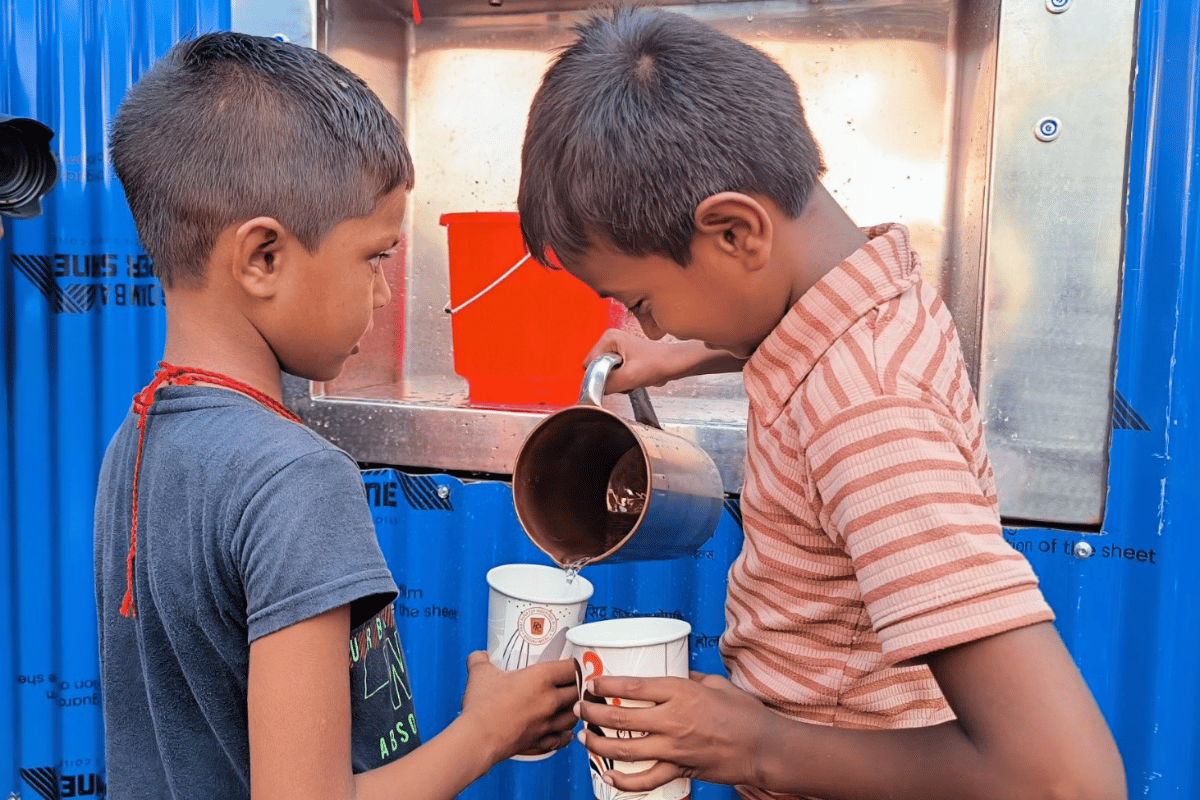
Photo Credit: CFRD Nepal via Twitter
China’s “development” partnership engages sub-national actors, particularly civil society organizations, local communities, political parties and state agencies. Direct engagement with local stakeholders and officials at the municipality and district levels allows China to build personal relations and extend leverages.
The Tibetan government has emerged as the new player to engage with Nepal’s northern districts. From now on the TAR government will provide around 20 million RMB (about USD 2.8 million) “each year” for the next five years starting in 2024 on infrastructure development and livelihood improvement projects.
While the Chinese have been engaged in the northern districts through small-scale aid, Chinese NGO presence itself has been limited despite plans to expand their operations.
FDIs
While China has historically made the highest FDI commitments to Nepal, its actual investment stock as of mid-July 2023 stood at just 12% of the total (NRB, 2024). Out of China's total FDI stock of Rs.35.5 billion, 77.6% focus is on energy.
China follows a "strategic sector dominance" approach, focusing intensively on specific sectors with large-scale infrastructure projects. In recent years, Chinese investments show diversification towards tourism, smart agro technology, and solar.
The investment structure indicates Rs. 28.5 billion in paid-up capital. However, it also carries negative reserves of Rs. 10.3 billion, which are offset by significant loans of Rs. 17.3 billion. This suggests that Chinese firms in Nepal are facing financial challenges and are employing an aggressive financing strategy, relying heavily on borrowed funds. This approach, while potentially boosting profits, also significantly increases investment risks and puts pressure on the local economy.