

INTRODUCTION: OPENING REMARKS & STRATEGIC CONTEXT
In his opening speech, the Chair, Ambassador Vijay Kant Karna, placed the discussion inside a global context: a "dramatic democratic decline." Ambassador Karna noted that in both strong democracies and mixed regimes, populist groups are attacking the democratic order. They are spreading a dangerous story: that authoritarianism (strict government control) creates better results for people than democracy does. He argued that the current crisis in Nepal is not an isolated event. Instead, it is part of a global trend where the "delivery of needs" (providing basic services) is being used as a weapon against "democratic values."
Ambassador Karna clearly defined the September 8 and 9 "Gen Z" protests. He stated these were not sudden political events, but an unavoidable explosion of "accumulated frustration" (anger built up over time). He emphasized that for young Nepalis, the breakdown of the rule of law is not a classroom debate. It is a "Lived Reality" (their actual daily experience) that hurts their opportunities, justice, and dignity. He described the movement as a direct reaction to several failures. These include systemic corruption driven by a "Kleptocratic network" (politicians stealing public money), a deep institutional failure where politicians are totally disconnected from youth goals, and a broken social contract because the state has failed to protect or provide for its people
A main point of Ambassador Karna’s analysis was a serious warning about the "Information Gap" (the lack of verified news). He noted that this gap appears immediately after political unrest. He explained that while the protests successfully removed the old administration, the result was a vacuum where there were no verified facts. "In geopolitics, such a gap does not stay empty," Ambassador Karna warned. "It soon fills with actors who come prepared with their narratives." Using CESIF’s two-year data, he revealed this was not random confusion. It was a coordinated struggle for influence. He described two foreign strategies currently targeting Nepal: using volume (loud noise) to create "echo chambers" of negative feeling that stop rational talk, and using precision (targeted messages) to subtly shift the agenda to help foreign interests.
Ending his remarks, Ambassador Karna highlighted the "unprecedented shake-up" caused by the movement. He noted that over 800,000 (8 Lakh) new voters have registered. This proves that the public wants to change things through a democratic vote, not violence. However, he warned that this chance is fragile. With an "Interim Government" (temporary government) in place and elections coming soon, the country faces a complex landscape. In this situation, domestic "Anger of the Mind" (intellectual frustration) meets foreign influence. Navigating this will require "clarity, coherence, and a united national strategy."
EXECUTIVE SUMMARY & STRATEGIC OVERVIEW
1. 1 The Event Context
The CESIF Roundtable brought together the new "Gen Z" political class and Nepal’s established leaders ("Silver Sages"). The session was not just a complaint session. It was a deep review of Nepal’s crisis in politics and governance. The discussion used a future scenario (September 2025 Interim Government), but the analysis focused on the current crisis: bad governance, people leaving the country for economic reasons, and the collapse of trust between the state and citizens.
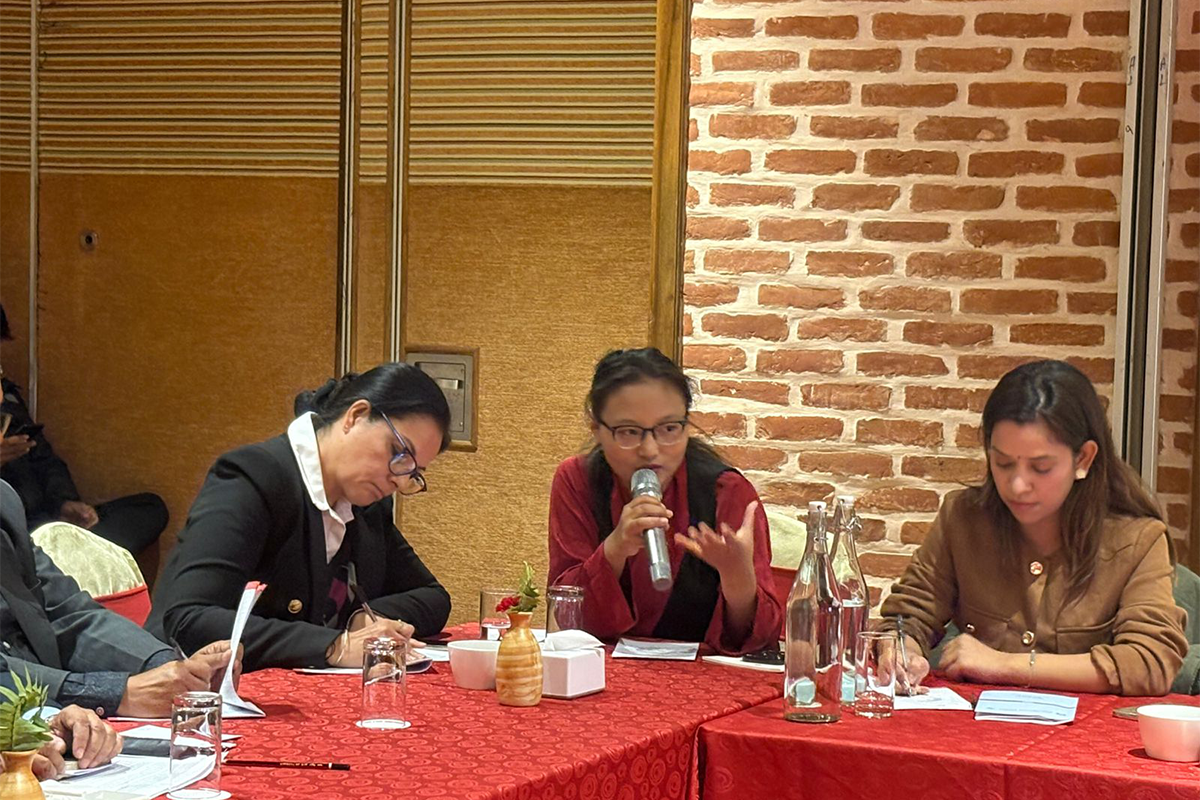
The main finding of the conference is that Nepal is splitting into two conflicting realities. On one side is the "Analog State" or the "Old/Slow State." This is represented by the "Syndicate" (a closed group) of political parties and a slow bureaucracy. In this system, access to the "Singha Durbar System" (the central government complex) depends on connections, nepotism (favoring family), and slow responses. In sharp contrast stands the "Digital Nation," represented by Gen Z. This reality runs on digital networks and global connections. It demands immediate, data-driven results, often described as "Technocracy" (rule by experts). The conference concluded that these two speeds have collided. The digitally connected generation is clashing with a political structure that moves in decades. This has caused a "State Meltdown," a term used by Mr. Hari Sharma to mean the government has lost its moral authority.
The discussion identified several specific strategic risks. Amb. Vijay Kant Karna warned against the "Sovereignty Trap" (losing control of the nation). He warned that Nepal is becoming a "battleground" for foreign interests because its own government is weak. Senior leaders also highlighted the danger of "Kakistocracy" (government by the worst or least qualified people). Amb. Madhuraman Acharya warned that if the current parties collapse without a structured alternative, power may fall to the worst actors in society. Furthermore, the group agreed on a "Regional Domino Effect." This suggests Nepal is following the same path as Sri Lanka and Bangladesh. Analysts argued that without an immediate "Course Correction," the mix of the "Hunger of the Stomach" (poverty) and the "Anger of the Mind" (political rage) will lead to total system collapse.
THE DOMESTIC RECKONING
I. The Anatomy of the "Gen Z" Uprising: Structure and Speed
I. The Anatomy of the "Gen Z" Uprising
Ms. Tashi Lhazom described the movement as a decentralized organism. It is driven by "mudda" (issues) and content, not by the personality of a leader. She challenged the old idea that a movement needs a charismatic leader to succeed. She believes this "leaderless" quality is the movement's biggest strength because it prevents established parties from taking control. A leader was born out of necessity. She called the current administration a "Kleptocracy" (rule by thieves, for thieves). She stated: "In my 25 years of existence, seeing the same four leaders rotate... if that is the definition of Nepali democracy, we reject it."
Ms. Ashmita Rijal supported this view. She rejected the criticism that the movement failed because it lacked a command structure. According to Rijal, the "leaderless" nature made youth feel safe to join in large numbers. She noted, "We didn't know who the leader was, but we joined based on the content... If there had been a specific leader, the youth power would never have reached that intensity."
Senior analysts questioned this "movement velocity" (speed). They asked if a "27-hour" protest could be seen as a legitimate mandate from the people. However, Mr. Lekhnath Pandey sharply disagreed with this "analog" (old-fashioned) metric. He introduced the concept of "Network Politics." He argued that in the age of AI and hyper-connectivity, time is compressed. "You judge the speed by old standards," Pandey argued. "The movement didn't lack a mandate because it was fast; it was fast because the technology allows it. A 24-year-old has already delivered the verdict while we are still debating the process."
Ms. Ojaswee Bhattarai reinforced this generational gap. She described it as a clash between "Digital Power" (digital coordination) and "Analog Governance" (outdated management). She rejected the expectation that youth should spend 50 years in student politics before leading. Her argument was absolute: "If digital awareness and coordination can topple a government in two days, expecting us to follow a 50-year-old analog political roadmap is absurd."
II. Bureaucratic Violence and the "Passport Office" Economy

The discussion moved from political theory to the economic reality of Nepali youth. Mr. Manish Khanal provided a painful description of the "Queueing Culture" in Nepal. Citizens spend their lives standing in lines for everything from licenses to degrees to taxes with no dignity or certainty. He contrasted the "hourly wage" dignity of peers in the West with the "monthly uncertainty" of Nepal. He stated, "A citizen is reduced to someone who stands in line... We spend our lives in queues just to validate our existence."
Mr. Aayush Bashyal expanded this complaint to the nation’s economy. In a key metaphor, he declared that Parliament and the Courts were no longer the vital organs of the state. "The true heartbeat of our nation is not the ministries, but the Passport Office in Tripureshwor," he argued. He asserted that the country survives only because people leave to work abroad. Ms. Rose Kandel supported this, citing migration statistics (3.2 million abroad, providing 26% of GDP). She demanded the government stop trying to "prevent" migration. Instead, it should manage it through "Foreign Diplomacy" to ensure dignity for workers, admitting the state has lost the economic argument to keep them home.
Ms. Ojaswee Bhattarai used the "Singha Durbar Pass" as a symbol of youth anger. She described Singha Durbar (government headquarters) as a private club. Ordinary people cannot enter without connections. "To enter Singha Durbar, a common citizen needs a 'pass' recommended from the inside. If you have no one inside, you cannot enter," she stated. This "locked gate" reality justifies the "Nepo-Baby" narrative (success based on family connections). The youth argue the system is rigged to privilege the children of the elite while locking the working class out of their own institutions.
III. The Collapse of State Legitimacy and the "Arson" Debate

A key part of the meeting analyzed the state's failure during the protests (referred to as "Bhadra 23-24"). Dr. Bhaskar Gautam gave a chilling academic assessment. He argued the state did not just fail; its civil administration collapsed within 48 hours. He pointed to the use of the Army on the second day as proof that the police and civil government had dissolved. "If a state requires the military to handle civic protests on day two, that is a collapse of public security," Gautam asserted. He described the last two decades of governance not as democracy, but as the "Politics of Prohibition and Revenge."
The most controversial debate was about the burning of government infrastructure (Singha Durbar). Ms. Sucheta Pyakuryal offered a symbolic meaning for this violence, refusing to call it simple vandalism. She urged the youth, "Don't be too apologetic about the fire. Revolution is a fire." She argued that when the public refused to put out the flames, they were silently agreeing with the destruction of a system they felt excluded from. Mr. Hari Sharma accepted this fact, stating the state had "melted down" and "evaporated." He concluded that a government that uses force against its own citizens loses its soul. Therefore, "Legitimacy is broken... The only way to return legitimacy is through elections."
On the other hand, Mr. Abhijeet Adhikari warned that the "No Political Parties" sentiment is dangerous. It risks repeating the authoritarianism of the Panchayat era, also known as "Mandale Nationalism". He warned the group not to destroy democracy while trying to fix it: "We must draw the thin line: Where does rejecting these three parties end, and where does autocracy begin?" He questioned the right of the "weakest government since 2015" to change the constitution. He called this a move by "Shadow Politics" and invisible "Chefs" operating behind the scenes.
THEMATIC DIVERGENCE & GEOPOLITICS
IV. The Technocratic Trap: Efficiency vs. Inclusivity

A major difference in opinion appeared regarding the solution to the crisis. Ms. Prakriti Dhakal, an LSE graduate, pushed for a "Technocratic" governance model (rule by technical experts). She criticized Nepal’s senior leaders who speak in abstract poetry instead of concrete policy. "We are done and dusted with politicians who narrate problems in poetic tones," she declared. "We need leaders who know the price of onions as well as the price of hydropower." She demanded data-driven delivery. She specifically supported the "HIT" Framework: prioritizing Highways (monsoon-proof roads); I-ways (digital infrastructure); and Trans-ways (energy gateways). It is important to note that this specific framework was originally described by Indian Prime Minister Narendra Modi in 2014, symbolizing a connectivity model that the youth feel is still unfinished.
This "Technocratic" vision faced immediate intellectual opposition. Ms. Sucheta Pyakuryal warned that a pure technocracy is undemocratic and excludes people. She argued, "To say we only need 'Technocrats' is undemocratic. Knowledge isn't just a university degree; we need indigenous wisdom and feminine perspective, not just capitalist efficiency." They argued that replacing politicians with experts would further push women and minorities to the sidelines.
Ms. Tashi Lhazom, representing the Himalayan community, criticized the "Inclusion" narrative. She attacked "tokenistic inclusion" (fake inclusion), where indigenous youth are invited only to share "sob stories" or discuss climate change, but never hard diplomacy. She gave the example of Dawa Futi, an Ambassador who asked about climate change in her village rather than political diplomacy. Tashi expressed deep alienation caused by online comments calling Himalayan people "Not Nepali." She warned that if the state claims the land but rejects the people, it creates separatist feelings.
V. Geopolitics: The "Pilot Error" and the "Foreign Agent" Stigma
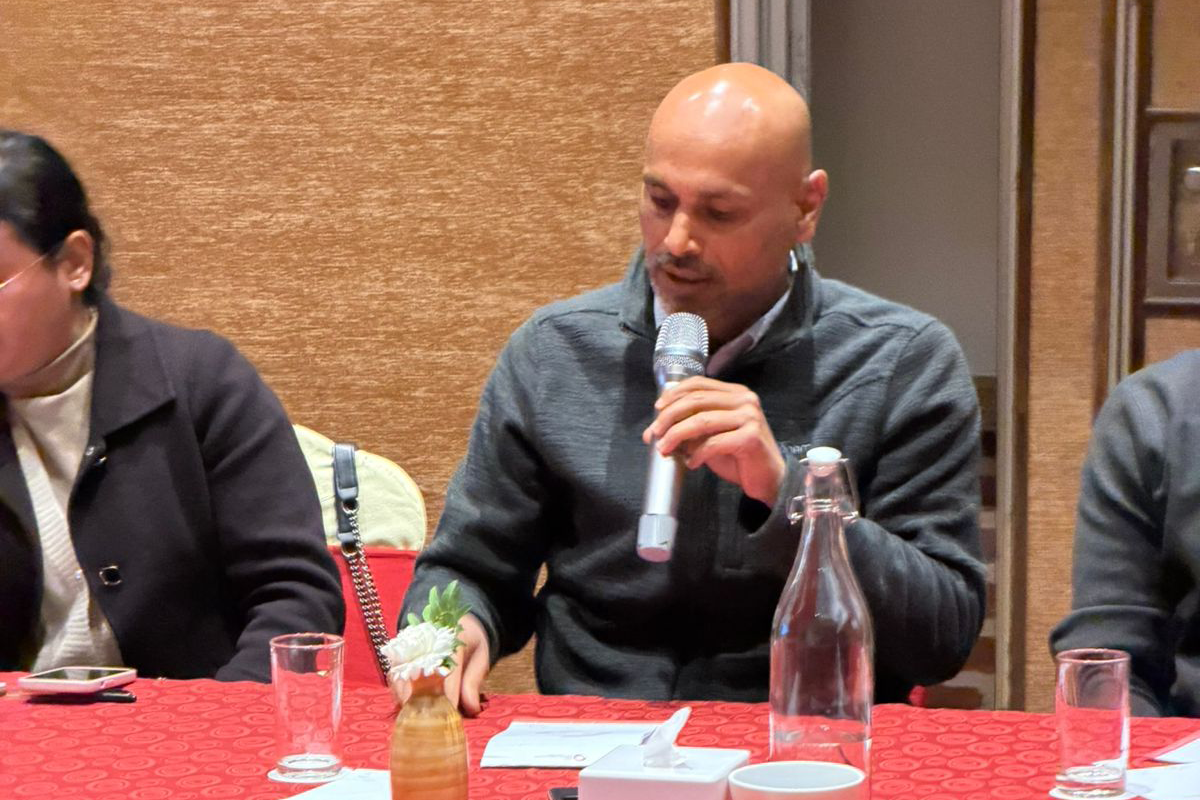
The conference addressed the constant accusation that the youth movement was funded by foreigners. Mr. Manish Khanal and Ms. Ashmita Rijal strongly rejected the "Foreign Agent" label, calling the rebellion homegrown. Khanal stated, "You call us agents of America or Europe? This rebellion is born from mass frustration... To label our genuine grievances as a foreign plot is to insult our lived reality." Ashmita noted the danger of this stigma, where merely appearing in a photo at such events labels you a foreign agent.
Mr. Shanker Das Bairagi, a senior diplomat, agreed with the youth but issued a serious warning about inexperienced leaders making foreign policy mistakes. He used the "Pilot Error" metaphor: "In other sectors, you can apologize and fix it. In foreign policy, like in aviation, a pilot's error leaves no room for 'ifs and buts' - everyone crashes." He argued that frequently changing ambassadors had destroyed Nepal's "Institutional Memory" (the collective knowledge of the organization), leaving the country vulnerable.
Amb. Madhuraman Acharya reinforced this fragility. He warned that taking apart the current order without a clear alternative would lead to a "Kakistocracy" (rule by the worst elements of society). He advised the youth not to make politics their primary career. He urged them to build professional success first: "Don't build your future on politics... Opening a party is easier than opening a company. Do not fall into that trap."

OUTCOMES, CONSENSUS & ACTION ITEMS
4.1 Strategic Consensus
The participants reached an agreement on several key issues. First, everyone rejected the "Foreign Agent" narrative. They agreed that labeling youth protests as funded by the CIA or India is an invalid and dangerous political tactic. Instead, the unrest is a homegrown reaction to "Composite Governance Failure" (where the system exists but fails to deliver results), made worse by the "Lifestyle Gap" (the visible wealth difference between the elite and citizens). Second, the group acknowledged the "Passport Office" reality. They accepted that the State has lost its ability to economically motivate youth to stay in Nepal. Therefore, the focus must shift from trying to stop migration to managing it through diplomacy that ensures dignity. Finally, there is a binding agreement regarding the crisis of legitimacy. The government is viewed only as a technical "Election Government." It lacks the moral authority to change the Constitution or stay longer than six months. Fresh elections are the only path to restore legitimacy.
5.2 Dissenting Opinion
Gen Z participants (Ms. Prakriti Dhakal, Ms. Ojaswee Bhattarai) demanded a shift to Technocracy (leaders who understand economics and data). However, the Intellectual/Elder group (Ms. Sucheta Pyakuryal) formally rejected this. They argued that pure technocracy risks "Othering" (excluding) the older generation and ignoring indigenous/feminine wisdom. This disagreement remained unresolved.
5.3 Action Items & Recommendations
A. Political & Constitutional The conference created specific political and constitutional action items. Amb. Madhuraman Acharya proposed that the Government immediately draft and sign a formal agreement with Gen Z representatives. This should be modeled on Bangladesh’s "July Charter" to share the burden of reform and formalize the youth's role in the transition. At the same time, Mr. Hari Sharma emphasized that preparing for elections must be the only priority. Any attempt to change the Constitution by the current "weak" government must be stopped to prevent a return to "Mandale Nationalism" or autocracy.
B. Economic & Diplomatic In economics and diplomacy, Mr. Shanker Das Bairagi and Amb. Madhuraman Acharya stressed the need to institutionalize foreign policy. They argued for implementing the "3 Cs" (Consistency, Coherence, Credibility) and "3 Ds" (Defense, Development, Dignity). Foreign policy must shift from being driven by personalities to being driven by institutions to avoid dangerous "Pilot Errors." Ms. Rose Kandel advocated for migration diplomacy. She urged the Ministry of Foreign Affairs to shift focus from collecting remittances (money sent home) to assuring dignity through government agreements that protect the 3.2 million Nepalis abroad. Additionally, she called for startup liberalization, specifically removing import/export tax barriers to help youth who wish to remain in the country.
C. Infrastructure & Development Regarding infrastructure, Ms. Prakriti Dhakal repeated the need to implement the "HIT" Framework (Highways, I-ways, Trans-ways). This concept, introduced by PM Narendra Modi in 2014, ensures infrastructure can survive the monsoon and fosters digital connectivity. Furthermore, Ms. Tashi Lhazom recommended using Himalayan and border communities as cultural bridges for "Track 2 Diplomacy" (unofficial diplomatic channels) with China. She urged the state to formally integrate these groups rather than pushing them aside.
5.4 Final Conclusion
The Record of Proceedings confirms that the "Gen Z" phenomenon in Nepal is not a temporary outburst but a "Generational Turning Point" (Mr. Shanker Das Bairagi). The aftermath of the movement remains the main threat: Nepal has a history of successful revolutions (1990, 2006) followed by failed transitions.
The ultimate warning of this conference is that the "Pass System" of Singha Durbar has been broken by the "Network Politics" of the street. If the established leadership responds with "Arrogance and Ignorance" rather than a "July Charter" style partnership, Nepal could move from governance failure into total state collapse.
ANALYSIS: SYSTEMIC FRACTURES & THE GOVERNANCE VOID
The roundtable reveals that the conflict between the "Gen Z" movement and the old political order is not just a generational dispute over policy. It is a fundamental clash between two incompatible operating systems. The analysis identifies four critical fracture points: the timing mismatch between state and street, the loss of economic sovereignty, the technocratic paradox, and the geopolitical risk coming from the "Information Gap."
The central finding is the emergence of a "Two-Speed Nation."
- The Analog State: Represented by the "Syndicate" of old parties and bureaucracy. This system operates on a timeline of decades. Legitimacy comes from historical revolutions (1990, 2006) and formal election cycles (5 years).
- The Digital Street: Represented by Gen Z. This system operates on "Network Politics," where consensus is formed in hours via digital connections.
The friction point lies in how legitimacy is measured. Senior analysts questioned a "27-hour uprising," seeing it as lacking a proper mandate. However, the analysis suggests that in the age of AI, time has been compressed. The failure of the state was not just a failure of policy, but a failure of processing speed. The "Analog State" could not process citizen complaints at the speed required by the "Digital Nation." Consequently, the "State Meltdown" described by Mr. Hari Sharma was inevitable; the government became obsolete in its response time.
The discussion also revealed a dangerous shift in where state legitimacy lives. Historically, the heart of the Nepali state was Singha Durbar. The roundtable confirms that for the youth, Singha Durbar has become a symbol of exclusion: a "private club" accessible only through the "Pass System" of nepotism.
In this vacuum, the Passport Office has emerged as the true "heartbeat" of the nation. This represents a deep crisis of sovereignty. When the state's main function is validating the exit of its citizens, it loses the moral authority to demand loyalty. The "queueing culture" where citizens line up for basic validation contrasts sharply with the dignity available in global markets. The analysis indicates the government can no longer rely on "Nationalism" to keep youth at home. It has lost the economic argument. The "Hunger of the Stomach" is driving a migration that is existential. Essentially, the state is being hollowed out of its workforce.
With regards to technocracy, a sharp difference emerged regarding the solution. The Gen Z group demanded "Technocracy" (data-driven, precise governance that prioritizes delivery). This is a direct rejection of the "poetic politics" of the elders.
However, the analysis highlights a critical risk: the "Technocratic Trap." As warned by senior intellectuals, a purely technocratic approach often dismisses "indigenous wisdom" and "feminine perspectives" in favor of cold efficiency. If current political parties are dismantled without a structured democratic alternative, the vacuum may not be filled by experts. Instead, as Amb. Madhuraman Acharya warned, it risks being filled by a "Kakistocracy" (rule by the worst). The conclusion is that while the demand is for Technocracy, the risk is Anarchy if the transition is not managed through constitutional channels.
Ultimately, Combining Ambassador Karna’s opening remarks with the proceedings reveals the most severe strategic threat: The Sovereignty Trap. The analysis confirms that the "Information Gap" opens during domestic crises when state institutions fail to communicate. This is the primary entry point for foreign interference. During the "Bhadra 23-24" collapse, the state’s silence allowed external actors to fill the void with "Volume" (noise) and "Precision" (narrative shifting).
This creates a "Pilot Error" scenario in foreign policy. With the "Institutional Memory" of the Foreign Ministry eroded by political appointments, and a youth movement driven by fast digital news, the nation is vulnerable to becoming a proxy battleground. The "Foreign Agent" stigma attached to the youth is a symptom of this vulnerability; because the domestic state is so weak, any organized dissent is viewed as a foreign conspiracy. The analysis concludes that without a "Course Correction" that strengthens domestic institutions, Nepal risks sliding into the path of Sri Lanka or Bangladesh, where internal failure invites external intervention.
DISCUSSION & STRATEGIC OUTLOOK
The immediate question for Nepal is where the energy of the "Gen Z" movement will go. The proceedings offer different outlooks. While the risk of anarchy is high, Ambassador Vijay Kant Karna highlighted a critical number offering hope: the registration of over 800,000 (8 Lakh) new voters after the movement.
This surge suggests that the "Anger of the Mind" has not rejected democracy entirely; it is seeking a channel for expression. The discussion indicates that if the Interim Government can guarantee a credible election, this rage can be converted into a constructive democratic mandate. However, if the "Syndicate" tries to manipulate this process or delay the transition, the consensus warns that the "Digital Street" will bypass the ballot box, leading to renewed conflict.
The most haunting consensus of the roundtable was the acknowledgment of a "Regional Domino Effect." Participants argued that Nepal is tracking the path of Sri Lanka (economic collapse) and Bangladesh (student-led regime change). Analysts diagnosed that the combination of "arrogance" in leadership and "ignorance" of digital shifts is fatal and serves as the primary warning.
The discussion concluded that Nepal is in a fragile "Interim" state. The "Passport Office" economy is a ticking clock; the state cannot survive indefinitely on remittances while alienating the generation that provides them. Without an immediate "Course Correction," the mix of economic desperation ("Hunger of the Stomach") and political alienation ("Anger of the Mind") will make a systemic collapse probable.
To avoid this collapse, the roundtable generated a high-level strategic recommendation: the need for a formal "Inter-Generational Compact." Amb. Madhuraman Acharya proposed that the government must move beyond words and sign a formal agreement with Gen Z representatives, modeled on Bangladesh’s "July Charter." This agreement would:
- Institutionalize the Transition: Formally recognize the youth's role in the reform process, preventing the "Old State" from taking over the movement.
- Share the Burden: Shift the dynamic from "Protest vs. State" to "Youth & State vs. Reform," thereby restoring moral legitimacy to the government.
The CESIF Roundtable confirms that the "Gen Z" phenomenon is not a temporary grievance but a "Generational Turning Point." The "Analog State" has been permanently breached by "Network Politics." The "Pass System" of Singha Durbar is no longer viable in an age of hyper-connectivity.
The final conclusion is that the State faces a binary choice. It can either embrace the "Technocratic" demands for delivery and sign a "July Charter" to renew its legitimacy, or it can continue to rely on the "Politics of Prohibition." The latter path leads inevitably to the "Sovereignty Trap" where Nepal ceases to define its own future. The registration of 8 Lakh new voters offers a narrow window of opportunity; it is now up to the political leadership to ensure that this engagement results in a ballot, not a battle.
